personalized therapy plans
Every child receives a therapy plan built around their individual needs, strengths, and goals.
For children who find speaking clearly difficult, we provide gentle, play-based speech support.
TALK WITH OUR TEAM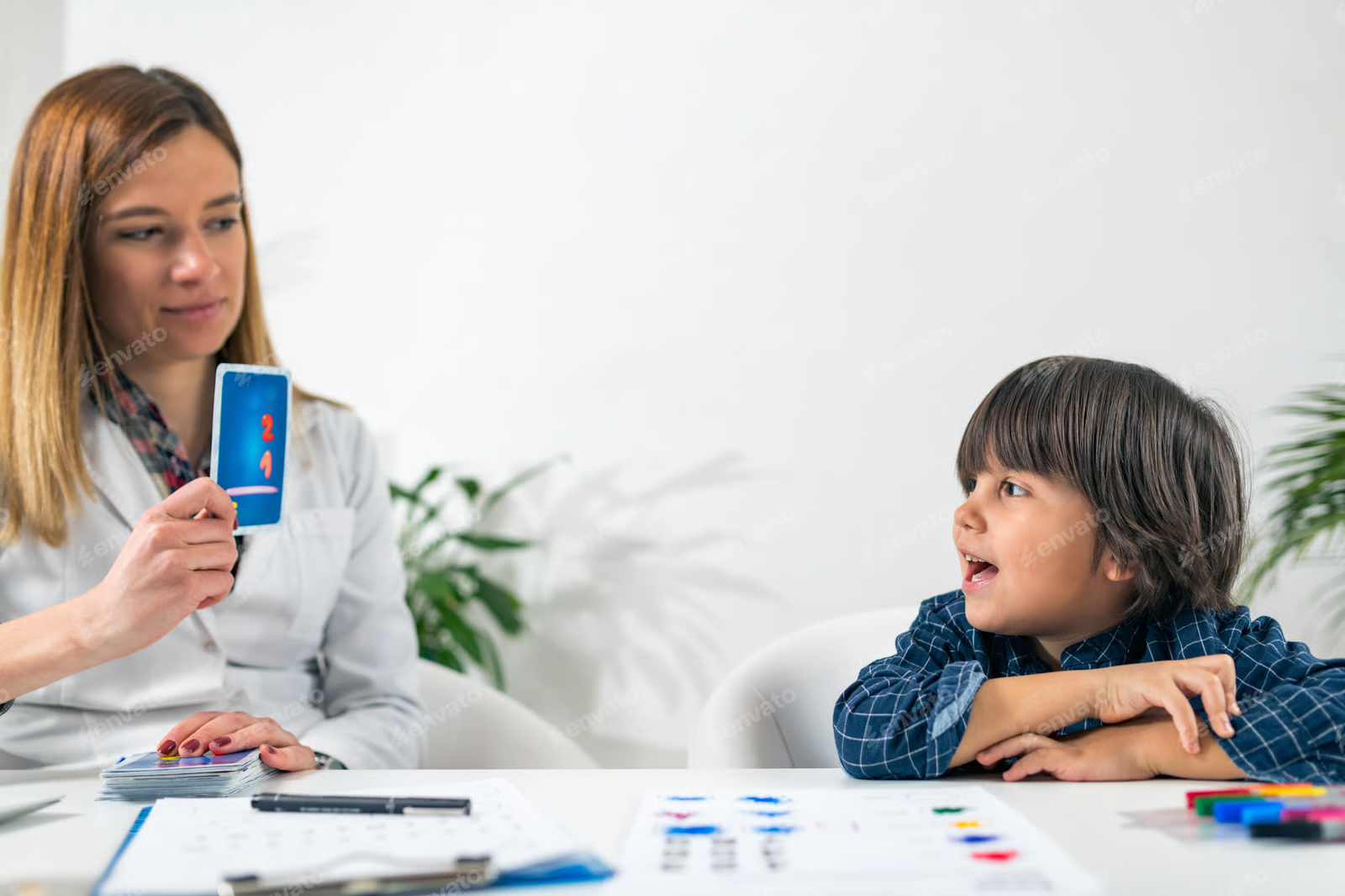

Childhood apraxia of speech is a motor speech condition that affects how a child plans and produces sounds, words, and sentences. Children with apraxia often know exactly what they want to say, but their brain has difficulty coordinating the mouth movements needed to speak clearly and consistently.
Because of this, speech may sound unclear, inconsistent, or effortful, even when a child understands language well. Children may struggle to repeat words, combine sounds smoothly, or be understood by others, which can impact confidence, learning, and everyday communication.

Your child may struggle to form clear sounds when trying to speak.
The same word may sound different each time it’s spoken.
Speech may feel slow, choppy, or effortful.
Extra mouth movements may appear when forming words.
Your child may use only a few speech sounds.
Speech may be unclear even to familiar listeners.
Childhood apraxia of speech affects how the brain plans and coordinates speech movements. In many cases, the exact cause is not known. Some children may have neurological, genetic, or developmental differences that impact how clearly they can speak.
Our therapy programs focus on strengthening sound planning, sequencing, and coordination — helping children with apraxia build clearer and more confident communication.
We begin with an evaluation to understand your child’s speech patterns, strengths, and communication needs.
We assess how your child plans and coordinates the movements needed for clear speech.
A customized therapy plan is created to target your child’s specific apraxia-related communication needs.
We track progress regularly and share simple home strategies to support continued growth.

Every child receives a therapy plan built around their individual needs, strengths, and goals.
Your child works with therapists trained specifically in speech and communication development.
Our team helps with coverage questions, referrals, and scheduling to make the process easier.
Focused sessions that help children improve sound sequencing, clarity, and motor planning for speech.
Engaging, child-friendly activities that build confidence, comfort, and natural communication.
Simple strategies for parents to reinforce and support your child’s progress between visits.
Regular check-ins and thoughtful plan adjustments to keep your child’s development moving forward.

Common Questions
Apraxia affects how the brain plans speech movements, while a speech delay usually involves learning sounds at a slower pace.
Apraxia affects how the brain plans speech movements, while a speech delay usually involves learning sounds at a slower pace.
Apraxia affects how the brain plans speech movements, while a speech delay usually involves learning sounds at a slower pace.
Apraxia affects how the brain plans speech movements, while a speech delay usually involves learning sounds at a slower pace.
Apraxia affects how the brain plans speech movements, while a speech delay usually involves learning sounds at a slower pace.
Testimonials
The team gave us simple home strategies that truly helped. We’ve seen steady progress and always know what the next goals are.

From the first visit, the environment felt calm and welcoming. Our child actually looks forward to sessions, which made a big difference for us.
We noticed improvements in our child’s communication within the first few weeks. The therapists explained every step clearly and made us feel involved throughout the process.
get started
Our team is here to listen to your concerns and answer any questions you may have. We’ll help you understand what your child may need and guide you through the next steps. You don’t have to figure this out on your own we’re here to support you and your child.
BOOK YOUR VISIT